


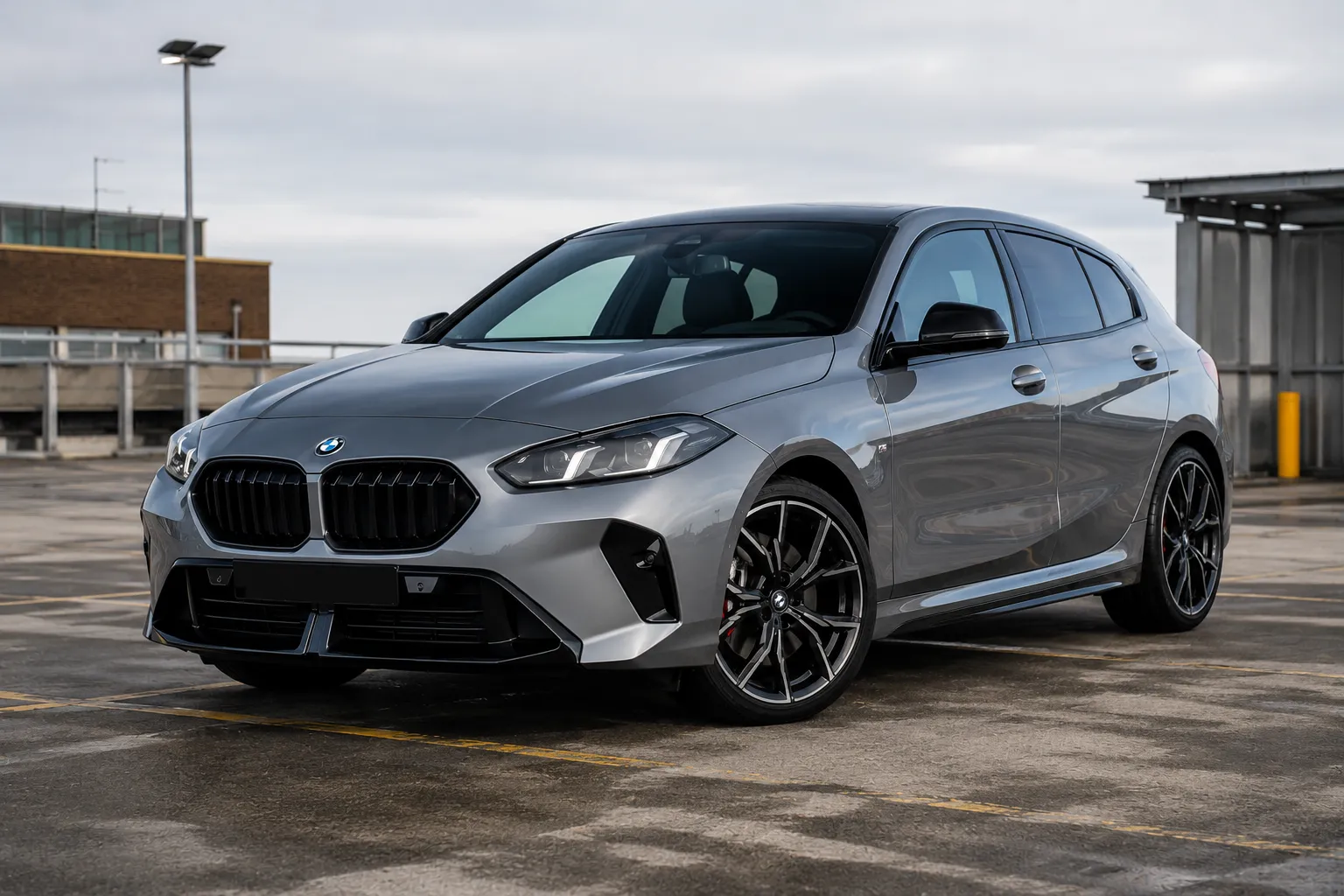
The 2026 BMW 1 Series UK is a posh five-door hatchback. Prices start at around £32,640 for the 120 Sport and go up to roughly £45,550 for the M135 xDrive. This new model gets 48V mild-hybrid petrol power, a stiffer body, a curved display running BMW Operating System 9, and fresh styling. It suits buyers who want a smart, well-built small car. But fans who miss its old rear-wheel-drive feel may have mixed feelings.
There’s something special about your first proper “grown-up” car. For a lot of British drivers, that car wears a blue-and-white badge. The 1 Series has long been the way into the BMW family. It’s small enough to feel nimble on a country lane, yet posh enough to make you sit a little taller in the Waitrose car park. It’s a car wrapped up in a lot of feeling, and the 2026 model keeps that story going.
BMW started out in 1916 building aircraft engines, which is why people often say the badge looks like a spinning propeller. From planes to the famous straight-six engines that made its sporty saloons so loved, BMW built its name on the promise of driving pleasure. The 1 Series brought a slice of that promise to people who couldn’t quite stretch to a 3 Series. So is the latest 1 Series BMW still worth your money? Let’s dig in.
A Brief History
The 1 Series arrived in 2004 as something quite unusual: a small hatchback that sent its power to the rear wheels. While rivals like the Audi A3 and Volkswagen Golf drove their front wheels, BMW stuck firmly to its rear-wheel-drive roots. Enthusiasts loved it. It handled with a balance and playfulness that few small cars could match, and the hot versions became cult classics.
Then came the big change. In 2019, BMW switched the 1 Series to front-wheel drive, with all-wheel drive on the punchier models. Some die-hards grumbled, but the swap made sense. It brought more cabin space, better practicality, and better fuel use. The current car, known inside BMW as the F70, carries on that front-driven path while sharpening the whole package.
What’s New for the 2026?
The big change is under the bonnet. Every petrol 1 Series now uses 48V mild-hybrid tech. This adds a small electric boost, smooths out the stop-start system, and trims fuel use. BMW has also stiffened the body and retuned the suspension, so the car feels tighter and more settled through corners.
Inside, there’s a fresh cabin built around BMW’s curved display and the latest Operating System 9 software. The styling has had a tweak too, with a bolder front end and sleeker rear lights. None of it is a huge rethink, but together these updates keep the BMW New Series 1 feeling current against tough rivals.
Price and Model Range (UK)
Pricing for the BMW 1 Series UK lineup starts at roughly £32,640 for the entry 120 Sport and climbs as you move up the range. Here’s how the BMW 1 Series price ladder looks:
120 Sport – from around £32,640
120 M Sport – from around £34,640
120 M Sport Pro – from around £38,250
123 xDrive M Sport – from around £37,840
123 xDrive M Sport Pro – from around £41,165
M135 xDrive – from around £45,550
Prices climb quickly once you start adding options, so it pays to be careful with the configurator. Even so, a BMW 1 Series Sport model costs less than a similar Audi A3, which makes the entry point really tempting.
Engine, Performance and Mild Hybrid System
The 120 models use a 2.0-litre turbocharged petrol engine with around 168bhp, sending power to the front wheels. It’ll do 0-62mph in roughly 7.8 seconds and feels brisk enough for daily life without ever feeling wild.
Step up to the 123 xDrive and you get all-wheel drive plus more muscle, around 215bhp, dropping the 0-62mph sprint to about 6.3 seconds. The grip from xDrive makes it a safe pick for wet British winters and the odd spirited B-road blast.
At the top sits the M135 xDrive, the closest thing to a proper hot hatch in the range. With roughly 296bhp on tap, it’ll hit 62mph in around 4.9 seconds and reach an electronically limited top speed of 155mph. It’s quick, planted, and great fun, even if it lacks the raw drama of the old rear-driven M models.
Exterior Design
The 2026 1 Series wears BMW’s well-known kidney grille. It’s bigger than before, though thankfully not as huge as on some of its siblings. Slim LED headlights sit either side of the nose, while the rear gets sharp, horizontal tail lights that give the car a wider, more planted stance.
Wheel sizes grow as you climb the range, from smart alloys on the 120 Sport to larger, more aggressive designs on the M Sport and M135 models. The M Sport trims add chunkier bumpers and subtle aero touches, and the M135 xDrive throws in M-specific styling and an M Compound brake system for that extra bit of menace.
Interior and Technology
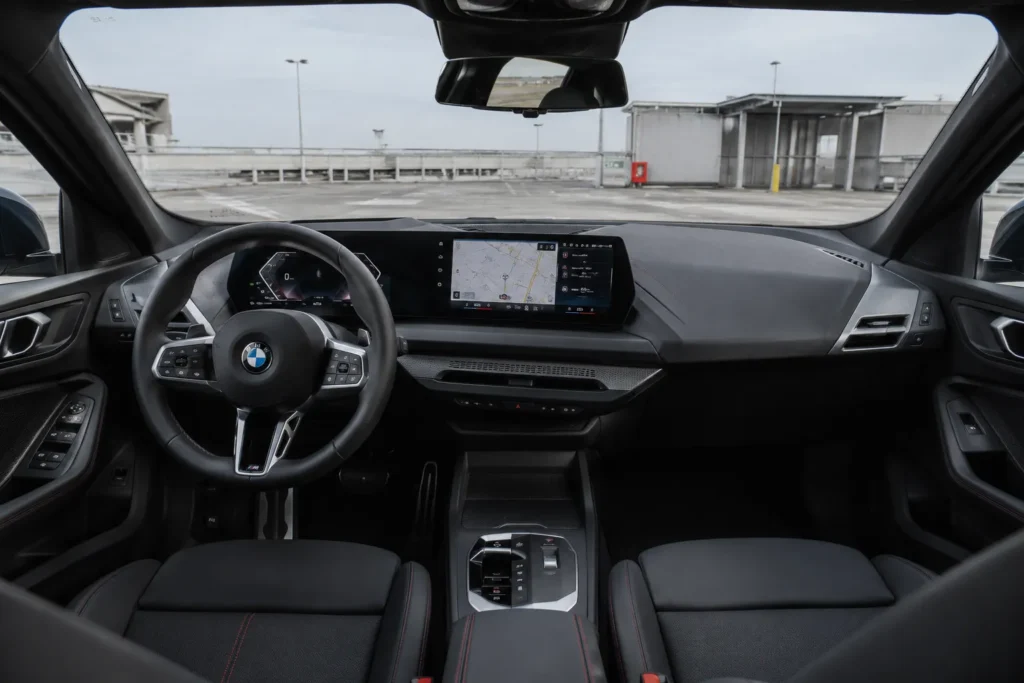
Climb inside and the cabin feels a clear step up from the old car. The dashboard is led by BMW’s curved display, which blends the driver’s dials and central touchscreen into one sweeping panel running Operating System 9. It’s slick, quick to react, and full of connected features, though some buttons have moved into the screen, which won’t please everyone.
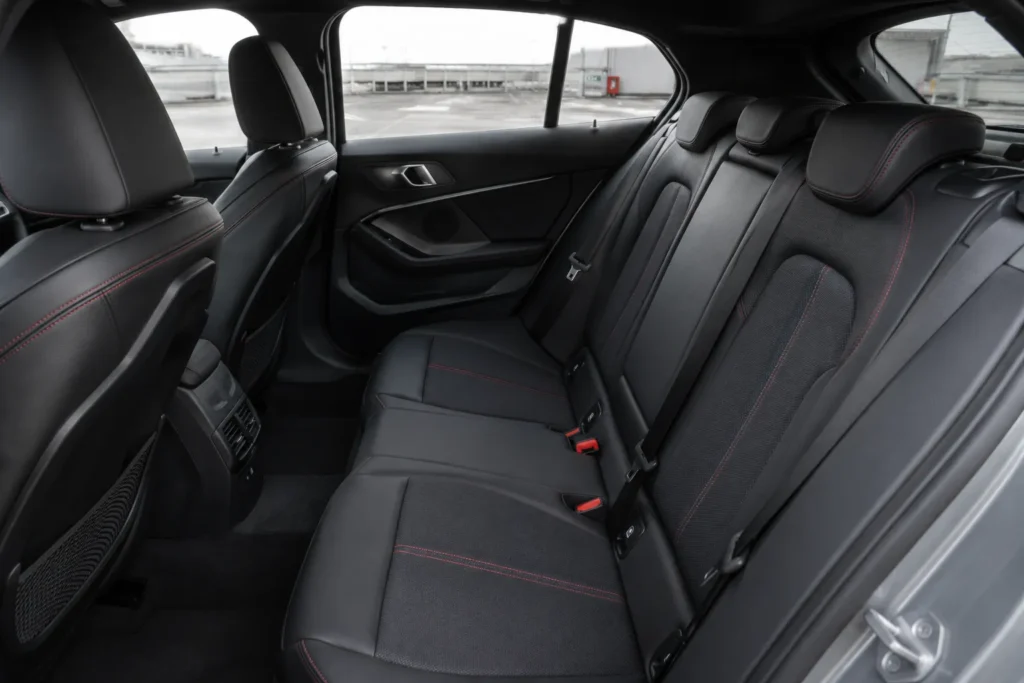
Standard kit is generous. You get supportive sports seats, dual-zone climate control to keep both front occupants happy, and quality materials throughout. A head-up display is available too, beaming your speed and sat-nav onto the windscreen so your eyes stay on the road. Upholstery ranges from hard-wearing cloth on entry cars to plusher trims higher up the range. Rear space is decent for the class, and the boot is handy enough for the weekly shop or a weekend away.
Trim Comparison
So which one should you pick? The 120 is the sensible heart of the range. It’s efficient, well-kitted, and more than quick enough for most people. The 123 xDrive is the sweet spot if you want extra pace and the safety of all-wheel drive without going full performance hero. The M135 xDrive is for the enthusiast who wants real speed and doesn’t mind paying for it.
If badge appeal and looks matter most, the M Sport and M Sport Pro trims add visual drama without a huge jump in running costs. For pure value, though, the BMW 1 Series Sport entry model is hard to argue with.
2026 vs Previous 1 Series Models
Next to the pre-2024 model, the latest 1 Series is more refined, more efficient thanks to mild-hybrid tech, and clearly better inside. The curved display and OS9 software feel far more modern than the older twin-screen setup. The stiffer body also makes it sharper to drive.
What hasn’t changed is the front-wheel-drive layout. If you loved the playful rear-driven cars of a decade ago, this car still won’t fully scratch that itch. But for everyday use, it’s the best 1 Series yet.
Who Is the 1 Series Best For?
The 2026 1 Series suits buyers who want a posh small car that’s easy to live with. Young professionals, downsizers, and anyone who values a prestige badge in a compact car will feel right at home. If you do lots of motorway miles and want comfort plus a bit of sportiness, it ticks the boxes nicely.
Who Should Avoid?
Old-school driving purists chasing the thrills of the original rear-wheel-drive cars may come away let down. In the same way, if outright cabin space is your top priority, a Golf or a Skoda Octavia gives you more room for the money. Budget-focused buyers might also find the BMW 1 Series price steep once options pile up.
Pros and Cons
On the plus side, the 1 Series offers a classy interior, strong engines, sharp handling, and that all-important posh badge. The mild-hybrid tech improves efficiency, and the xDrive models add real all-weather confidence.
On the downside, rivals give you more interior space, the touchscreen-heavy controls take some getting used to, and the driving feel is less distinctive than it once was. Options can also push the price up fast.
New vs Used BMW 1 Series: Which Should You Buy?
A brand-new car gets you the latest tech and a full warranty, but depreciation hits hardest in the early years. That’s exactly why a used BMW Series 1 for sale can be such a smart buy. The market is healthy, with plenty of choice if you go hunting for a BMW 1 Series used car.
Search the classifieds and you’ll find everything from a barely run-in BMW 1 Series auto for sale to older rear-wheel-drive gems. A nearly new BMW 1 Series car for sale lets someone else take the biggest hit on depreciation, while keeping you in a modern, well-kitted hatch. Whether you want a fresh BMW 1 Series sale model or a tidy pre-owned one, there’s a BMW 1 Series for sale to suit most budgets.
Final Verdict
For most British buyers, yes. The 2026 BMW Series 1 blends posh quality, genuine driving ability, and modern tech into a compact package that’s easy to enjoy day to day. It’s not perfect. It’s pricey when loaded, and it’s lost some of its old rear-driven magic. But it stays a truly desirable small car.
If you’re tempted, take a test drive in a couple of trims, weigh up new versus used, and pick the variant that fits how you actually drive. Whether you splash out on a new model or hunt down a used BMW 1 Series for sale, you’re getting a slice of BMW’s long love affair with driving pleasure.
FAQs
The BMW 1 Series UK range starts at around £32,640 for the 120 Sport and rises to roughly £45,550 for the M135 xDrive. Mid-range trims like the 123 xDrive M Sport sit around £37,840 before options.
No. The current 1 Series is front-wheel drive, with all-wheel drive (xDrive) on the 123 and M135 models. BMW switched from rear-wheel drive back in 2019.
The M135 xDrive is the swiftest, with around 296bhp, 0-62mph in about 4.9s and a top speed electronically limited to 155mph.
If you want the latest tech and full warranty, buy new. If you want to dodge the worst of the depreciation, then think about a BMW 1 Series for sale used. Examples are almost new, offering modern features at less cost.
This is a good fit for buyers looking for a smart, compact hatchback with strong engines and a classy interior. It is ideal for young professionals, downsizers and motorway commuters who still like to drive.





Leave a comment